Water and flood damage repair in Hampstead
Water damage repair in Hampstead begins with a safe assessment of the property. Leaks and floods can leave hidden moisture as well as visible damage. The source, affected materials and contamination determine the cleanup plan.
This guide explains the main steps. Contact a restoration provider that serves your address. If you call Toronto Restoration at 416-400-3076, confirm location and service availability before arranging work.
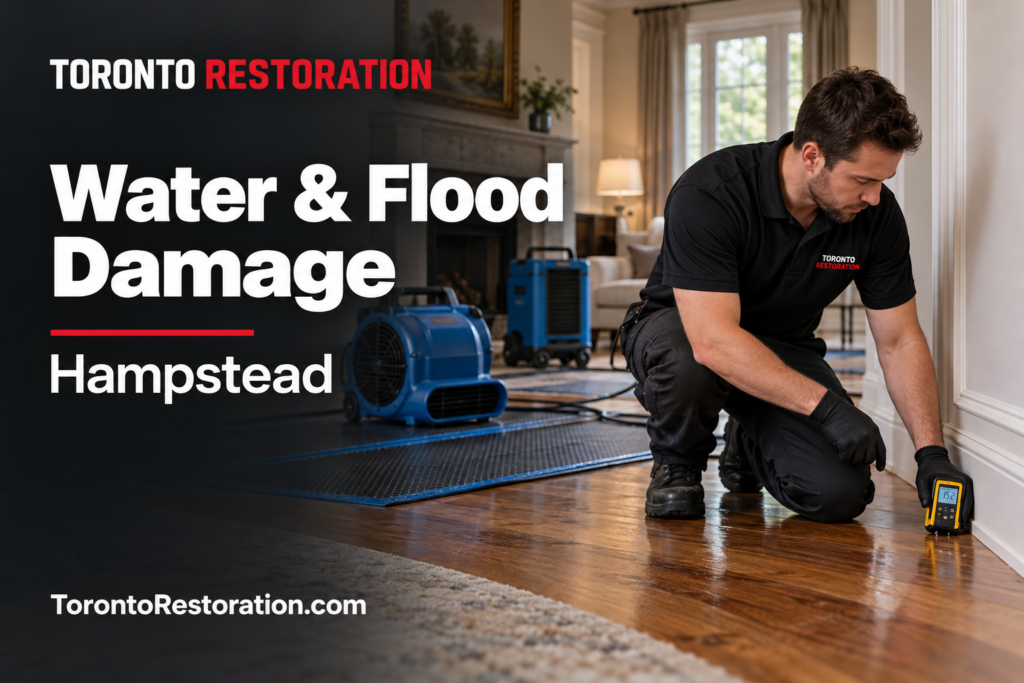
Water removal and extraction
Extraction removes standing water where the site is safe to access. However, removing surface water does not dry moisture inside floors, walls or furnishings. The assessment should identify those materials and explain which may need removal.
Keep clear of electrical hazards and contaminated water. See Health Canada’s flood cleanup advice before handling affected materials.
Assessing water damage repair in Hampstead
First, a useful inspection considers the source, spread and condition of the materials. However, do not assume water is safe because it looks clear. Important questions include:
- Where did the water come from?
- What materials and areas did it contact?
- How long have those materials stayed wet?
Also, photographs and moisture records help explain the work. Your insurer can confirm coverage and any documentation or approval requirements.
Drying and dehumidification
Drying equipment helps remove remaining moisture after appropriate extraction and cleanup. Its placement depends on the room, materials and contamination. Moisture checks guide adjustments and the decision to proceed with repairs.
Cleaning and sanitizing
After addressing damaged porous materials, clean suitable remaining surfaces. Product choice and use must follow the label. Some contents need specialist treatment, while others may not be salvageable.
Addressing odours
For example, a lingering smell can indicate remaining wet or contaminated material. Find and address the source before considering odour treatment. Fragrance does not correct moisture damage.
The water damage restoration process
Each loss needs a scope based on the property. Our water damage service information explains the general approach.
Assessment
Review safe access, the water source and the affected areas. Agree on the proposed work and clarify which decisions depend on further inspection.
Remove standing water
Once the site is safe, use suitable extraction equipment. Removal of damaged materials may also be needed to reach trapped moisture.
Dry affected materials
Monitor the drying process instead of relying on touch alone. Different materials dry at different rates, so assess them before estimating completion.
Assess appliances and contents
Do not switch on water-damaged electrical appliances. Instead, ask an appropriate qualified professional to assess them. Discuss cleaning, replacement and disposal of other contents as part of the scope.
Plan repairs
Finally, repairs follow cleanup and assessment of the remaining materials. Before rebuilding, confirm the scope, costs and any required approvals.