
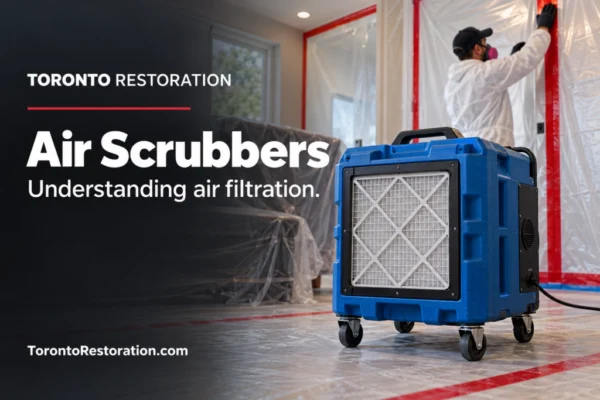
Air scrubbers draw room air through filters to capture suitable airborne particles. During restoration, they can support work that creates dust or leaves fine residue. However, a machine does not remove the damaged material that caused the problem. It must fit the cleanup plan.
What air scrubbers can and cannot do
Filters capture particles carried into the unit. For example, a suitable HEPA filter can help collect fine particles in the air. The unit, filter condition and room setup all affect its use. Therefore, equipment should match the work area and the material involved.
Filtration does not dry a wet wall or clean soot from furniture. Also, a particle filter does not remove every gas or smell. The EPA explains the limits of air cleaning and why removing the source still matters.
Set up the work area first
Before an air scrubber starts, review the source of the dust and who uses nearby rooms. Some work needs a separate contained area. In that case, the crew should plan airflow, access and filter handling together. A portable unit alone does not prove that containment is working.
Keep the intake and outlet clear. Also leave filters, hoses and controls as the crew set them. If the unit stops or an alarm appears, tell the site contact instead of opening it yourself.
Use air scrubbers with cleanup and drying
After a leak, water removal and drying address moisture in the building. Air filtration may support that work when appropriate. Likewise, smoke cleanup needs care for residue on surfaces and contents.
Ask why the air scrubber is needed, where it will sit and how its use will be reviewed. Then confirm the equipment charges in the written scope. These questions help you understand its role without assuming that more machines always mean better results.
Air scrubber FAQs
Does an air scrubber replace cleaning?
No. Surfaces and damaged materials still need the care set out in the cleanup plan.
Will it dry a wet room?
No. Drying requires a separate moisture-control plan.
Can I move the unit?
Ask the crew first, because its position may be part of the airflow plan.
How long should filtration run?
It depends on the work and site conditions. Ask how the crew will review its use.
Does clean-smelling air prove the room is safe?
No. Smell alone cannot confirm that every hazard or pollutant is gone.


